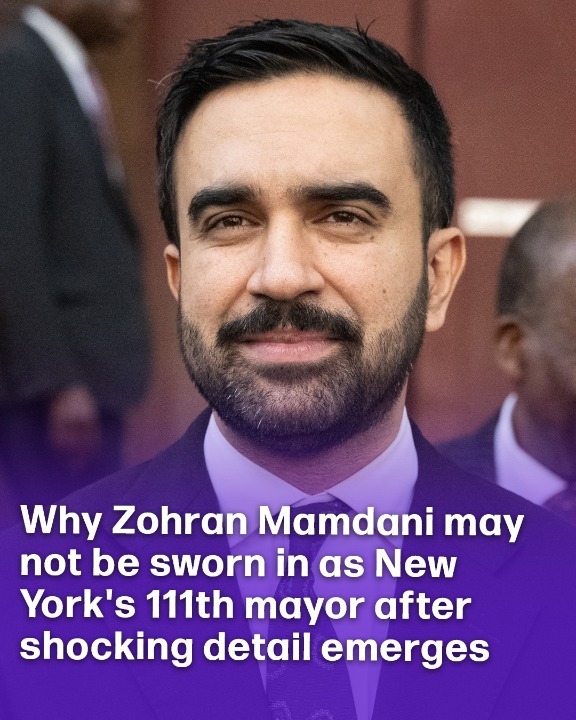
Zohran Mamdani’s election as New York City mayor made history in more ways than one. Born in Kampala and raised in Queens, the 34-year-old will become the city’s first Muslim, first South Asian, and first Africa-born mayor — a reflection of a metropolis whose leadership is finally beginning to resemble its people. Officially, he is set to be sworn in as New York’s 111th mayor in January 2026.



But a recent archival discovery suggests he may actually be the 112th. Historian Paul Hortenstine, while studying early colonial governance, uncovered a centuries-old counting error: Matthias Nicolls — long recorded as New York’s sixth mayor — actually served two non-consecutive terms, in 1672 and 1675. By modern standards, those terms should count separately, much like Grover Cleveland’s presidencies. A misinterpreted 17th-century Dutch-English ledger entry likely caused the oversight.
Correcting the error wouldn’t change Mamdani’s authority — only the ceremonial numbering. It would, however, require revising historical plaques, city archives, and public databases. The last time scholars raised this discrepancy, in 1989, it was quietly ignored. Now, with new evidence resurfacing, the question returns: should New York rewrite a footnote in its own history?
In a way, the timing feels poetic. Mamdani’s election represents a rewriting of who holds power in a city built on immigrant stories, forgotten records, and evolving identities. Even a misplaced number serves as a reminder that history is never fixed — it shifts, reveals, and corrects itself. And as New York welcomes a mayor unlike any before him, the city is once again learning that the past and the future often speak to each other in unexpected ways.